
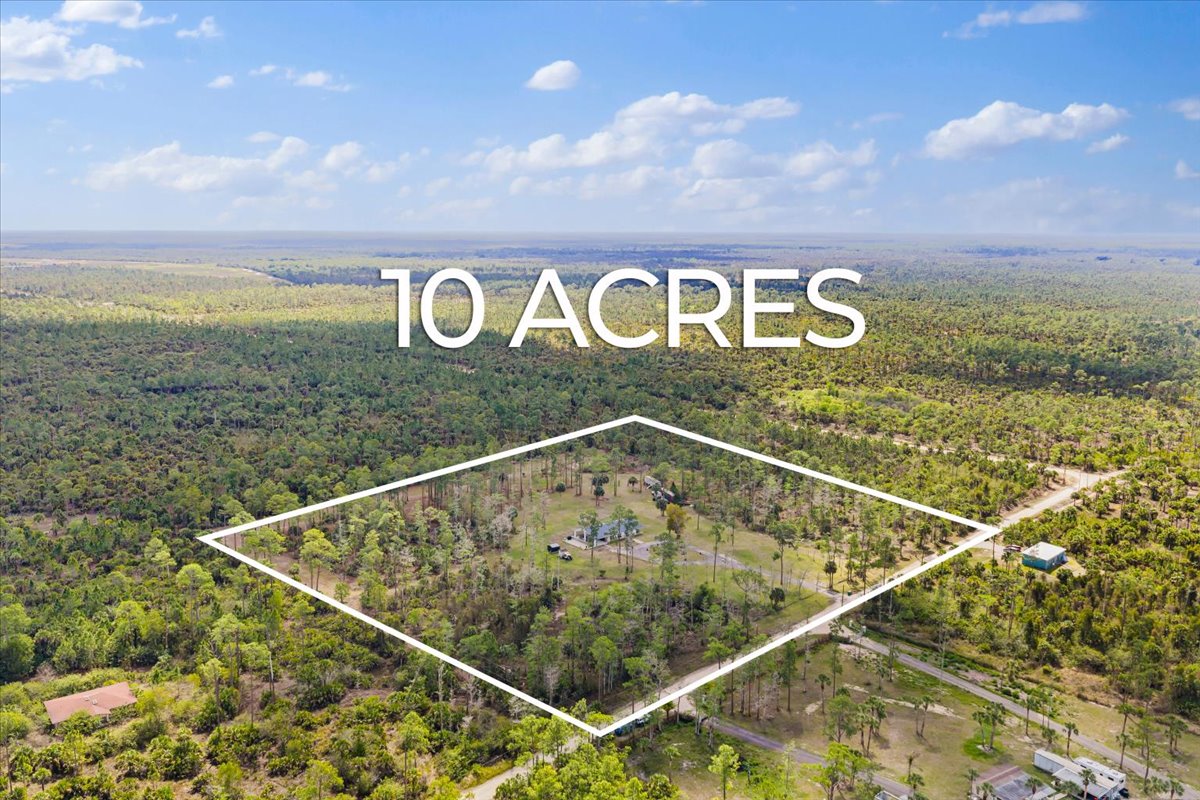
The land is the easy part. It’s the water going in and the water going out that decide whether a Golden Gate Estates purchase is a good one.
Buyers coming from a city or from a gated community have never owned a well or a septic system. They tour a house on two and a half acres, love it, write an offer, and run a standard home inspection that covers neither of the two systems the entire property depends on.
Then there’s the other question I get constantly out here, which is whether a lot can be split. The answer is usually more complicated than the person asking hopes, and it needs to be answered before you buy rather than after.
Here’s the due diligence list for acreage, in the order I’d run it.
What you’re actually taking on
Most of the Estates is on a private well and a private septic system. No water bill, no sewer bill, and no utility company responsible when something stops working.
That’s not a drawback. It’s a trade. You’re swapping a predictable monthly charge for occasional larger costs you control the timing of, mostly. What goes wrong is not the arrangement, it’s buying without knowing the condition and age of either system.
If you’re still deciding whether acreage is the right category at all, I covered the wider picture in what living in Golden Gate Estates is actually like and in the guide to Naples neighborhoods without an HOA. This page is narrower. It’s the mechanical due diligence.
The well
What drives the cost of a well
Depth, casing, the pump, and the pressure tank. Depth is set by geology on that parcel, so a neighbor’s number is an indication and not a quote. Get a local well contractor to price the specific property rather than working from an average.
The important question on an existing home isn’t what a new well costs. It’s how old the current one is, how old the pump is, and whether the water has been treated consistently.
Iron, sulfur, and what treatment actually does
Collier County groundwater commonly carries iron and sulfur. That’s why so many homes out here run a softener, an aerator, or a filtration system, and why the equipment in the garage is not optional decoration.
Iron stains fixtures and laundry. Sulfur is the rotten egg smell. Neither is a health emergency on its own, and both are handled by equipment that costs money to install and money to maintain.
When you tour, look at the treatment equipment and ask when it was last serviced. A system that’s been neglected tells you more about the house than the countertops do.
The pump and the tank
Submersible pumps fail. So do pressure tanks and pressure switches. These are the routine repairs of well ownership and they’re not catastrophic, but they arrive without warning and usually on a weekend.
Ask the seller for service records. If there are none, budget as though the pump is near the end of its life rather than assuming it isn’t.
Testing the well during your inspection period
This is a separate inspection that you order and pay for. A general home inspector does not test water quality or evaluate the well system unless you specifically engage them or a specialist to do it.
Test for bacteria at minimum, plus the mineral content that determines what treatment the house needs. If the property has been vacant, say so when you order the test, because stagnant water in the lines changes the result.
The septic system
Tank and drainfield are not the same problem
The tank is the concrete box. It needs pumping on a cycle and it lasts a long time. The drainfield is the buried distribution area where effluent disperses into the soil, and it is the expensive one.
Drainfields have a finite life. When one fails, you’re replacing a system component that requires permitting, excavation and a meaningful part of your yard. That is the number you want to know about before closing, not after.
Who actually regulates septic in Florida now
This changed and a lot of people have it wrong. Regulatory responsibility for onsite sewage treatment and disposal systems moved from the Department of Health to the Florida Department of Environmental Protection effective July 1, 2021, under the Clean Waterways Act.
But the practical work did not move. County health department offices still handle the permitting and the inspections in most counties, Collier included. So when you’re chasing records for a specific property, you’re calling the county, not the state.
What a septic inspection covers, and what it misses
A real septic inspection means locating and opening the tank, pumping it if needed to see the condition, checking the baffles, and evaluating whether the drainfield is accepting flow.
What a visual walkover misses is almost everything that matters. Soggy ground or odor over the drainfield is a late symptom, not an early one. Pay for the real inspection.
Pull the permit file
Ask the county for the permit record on the system. You want the original permit, the size of the tank, the design of the drainfield, and any repair permits since.
Two things that file tells you. Whether the system was permitted at all, which matters on older parcels and on any addition somebody built themselves. And whether the system is sized for the house as it exists now. A three bedroom system serving a house that has been expanded to five bedrooms is a problem you inherit.
What shortens a drainfield’s life
Volume above what it was designed for, parking or building on top of it, and anything going down the drain that shouldn’t. On acreage, the common one is a buyer who adds a guest house or a large addition and never upsizes the system.
If you’re planning to expand the house, the septic capacity is part of that plan and needs to be priced into it from the start.
Lot splits, and what the county actually allows
Why people ask
Two reasons, usually. Somebody buys five acres intending to build on part and sell the rest, or a family wants two homes on one parcel for relatives.
Both are reasonable goals. Neither is automatic.
The minimum lot size question
Whether a parcel can be divided depends on the zoning of that specific parcel, the minimum lot size and width that zoning requires, and whether the resulting pieces would each meet those standards with legal access.
Estates zoning has requirements, and a large acreage number does not by itself mean the parcel can be split into conforming lots. This is a question for Collier County Growth Management with the parcel number in hand.
Access, easements and the flag lot problem
Every resulting parcel needs legal access to a public road. A back piece with no frontage is not a buildable lot just because it has acreage, and solving that with an easement or a flag configuration has its own rules.
Check the title work for existing easements too. A utility or drainage easement running through the middle of the parcel affects where a structure can go and can undermine the whole reason you were splitting.
Never buy on the assumption
This is the part I’ll say plainly, because I’ve watched it go wrong. Do not pay a price that only makes sense if the lot can be split, before the county has told you in writing that it can.
If the split is central to your plan, that verification belongs inside your inspection period, with your money still protected.
Insurance on acreage
The structure drives it, not the land
Florida underwriting looks at the house. Roof age and remaining insurable life, the electrical panel, the plumbing, and the wind mitigation features. The acreage itself is not what sets your premium.
I’ve written the full version of that in what makes a Naples home insurable, and on an older Estates home it is worth reading before you write the offer.
Outbuildings and detached structures
The workshop, the barn, the detached garage, the guest house. These are often covered differently from the main dwelling, sometimes with separate limits and sometimes not at all by default.
If the outbuilding is a large part of why you’re buying the property, confirm how it’s covered before closing rather than discovering the gap after a storm.
Flood zone on a large parcel
Flood zone designation is parcel specific and, on acreage, the designation across a single large parcel is not always uniform. Where the house sits on the parcel matters.
Pull the determination for the address and look at the elevation certificate if one exists.
Permits, setbacks and the thing you’re planning to build
Most of what people want to do out here is possible. Detached garages, workshops, RV and boat storage, guest houses. What varies is the size allowed, the setbacks from each property line, whether a guest house may have a full kitchen, and whether your intended use is permitted outright or needs a conditional use approval.
Call Collier County Growth Management with the parcel number and describe the actual plan. Not the general idea. The actual building, the actual size, the actual use. Ten minutes on the phone before you buy is worth more than any assumption.
And check the title work for recorded restrictions. No HOA does not mean no recorded restrictions, which is a distinction I get into in the no-HOA guide.
The inspection list I’d run on an Estates purchase
General home inspection. Well inspection and water quality test as a separate engagement. Septic inspection with the tank opened, not a visual. County permit file on the septic system. Wind mitigation and four point if the insurer wants them. Flood zone determination for the address. Survey, particularly if you care about where the property lines actually are and whether anything encroaches. Title commitment read closely for easements and recorded restrictions.
That’s more than a standard purchase and it costs more up front. It is also the difference between buying land and buying a problem, and every one of those items is cheaper than the thing it protects you from.
Common questions about wells, septic and lot splits in Golden Gate Estates
Do all Golden Gate Estates homes have well and septic?
Most do. County water and sewer service is limited in the Estates, so homes typically run a private well with treatment equipment and an onsite septic system. Some parcels closer in have utility access, so confirm for the specific address rather than assuming either way.
Who regulates septic systems in Florida?
Regulatory responsibility for onsite sewage treatment and disposal systems moved from the Department of Health to the Florida Department of Environmental Protection effective July 1, 2021 under the Clean Waterways Act. County health department offices still handle the permitting and inspections in most counties, so records and permits for a specific property come from the county.
Does a home inspection include the well and septic?
No. A standard home inspection does not test water quality, evaluate the well system, or open and assess the septic tank and drainfield. Those are separate inspections you order and pay for during your inspection period.
How long does a septic drainfield last?
It varies with soil, system design, usage and maintenance, which is why the inspection matters more than any average figure. What shortens it reliably is overloading it beyond its design capacity, driving or building over it, and neglecting tank pumping. Ask for the permit file and service history rather than relying on a rule of thumb.
Can I split a lot in Golden Gate Estates?
Sometimes, and it depends entirely on the parcel. Zoning sets minimum lot size and width, every resulting parcel needs legal access to a public road, and existing easements can restrict what is usable. Confirm with Collier County Growth Management using the parcel number before you buy, and do not pay a price that only works if the split is approved.
Can I put a guest house or workshop on acreage in Naples?
Often yes. Setbacks, maximum accessory structure size, whether a guest house may have a full kitchen, and whether your use is permitted outright or requires conditional use approval all vary by parcel and zoning. Describe your actual plan to Collier County Growth Management rather than asking in general terms.
Is well water in Collier County safe to drink?
Private wells are not regulated the way public water systems are, so testing is the owner’s responsibility. Local groundwater commonly carries iron and sulfur, which is a treatment and taste issue rather than a health one, but bacteria testing is the reason to test before you buy and periodically after.
Does acreage cost more to insure?
The premium is driven by the structure rather than the land, so roof age and remaining insurable life, the electrical panel, the plumbing and wind mitigation features are what set it. What acreage adds is detached structures, which are often covered under separate limits, so confirm how a barn, workshop or guest house is covered.
Where to go from here
None of this should talk you out of acreage. The people who buy out here and love it are the ones who knew what they were taking on and priced it in. The ones who struggle are the ones who ran a standard inspection on a property that needed three more.
If you’re looking at a specific parcel, the well, the septic permit file and the zoning question are the three things I’d chase first, and all three can be answered inside a normal inspection period.
For the wider picture on the area, start with the Golden Gate Estates guide or acreage in Naples. Buying here for the first time, the Naples Buyer Guide covers the market segments, inspections and how to write the offer.
Every closing I’ve handled is published with the address and price on my recent sales page, listing side and buyer side.
Send me a parcel number and I’ll tell you what I’d pull first. Text or call (239) 350-2356.
Thirty minutes, no obligation. Or text or call (239) 350-2356.