Golden Gate Estates

Golden Gate Estates
You don’t move to Golden Gate Estates for an HOA to tell you what color to paint your house. You move here for privacy, flexibility, and land. That’s really the whole story, and once you understand that, everything else about this area makes sense.
Golden Gate City and Golden Gate Estates are not the same place. Golden Gate City is the tighter, close-in neighborhood near Naples, laid out on a regular grid. Golden Gate Estates is the larger one, over 100 square miles of eastern Collier County, stretching from Collier Boulevard out toward the Everglades, with Immokalee Road along the north border and I-75 along the south. Golden Gate Boulevard runs through the middle. Wilson, Everglades, and DeSoto Boulevards run north to south.
Golden Gate Estates isn’t about resort amenities or clubhouses. It isn’t a gated community, though you’ll find pockets that are. It’s about land, freedom, and the ability to do what you want with your own property. When someone tells me they’re looking out here, I already know why: they want the land and the privacy that comes with it.
Understanding the lot sizes, because this is where people get confused
Land sizes vary more than people expect, and the number on the listing doesn’t always tell the whole story.
Some parcels run around 1.14 acres. Locally we call these band-aid lots, because even though they’re over an acre, they’re long and narrow, so they can feel tighter than the acreage suggests. They work for some buyers, but they’re not ideal if what you actually want is real separation and room to expand.
Once you get into the 1.59-acre range, you start to feel a real difference in breathing room. But where most buyers land is 2 acres and up. Lots around 2.25, 2.5, and 2.7 acres, sometimes closer to 3 depending on how the land was originally divided, tend to be the sweet spot. Depending on where the house sits on the lot, there’s often room for driveways on both sides and space to expand toward the back. That’s where people start adding RV and boat storage, guest houses, workshops, or extra buildings.
If you run a business and need real flexibility, this is usually the range to look at. Then there’s the buyer who goes all in at 5 acres or more. At that size, you’re not worrying about what gets built next door, and you likely won’t see your neighbors at all. That’s a different level of privacy entirely.
Privacy here comes from the land, not the rules
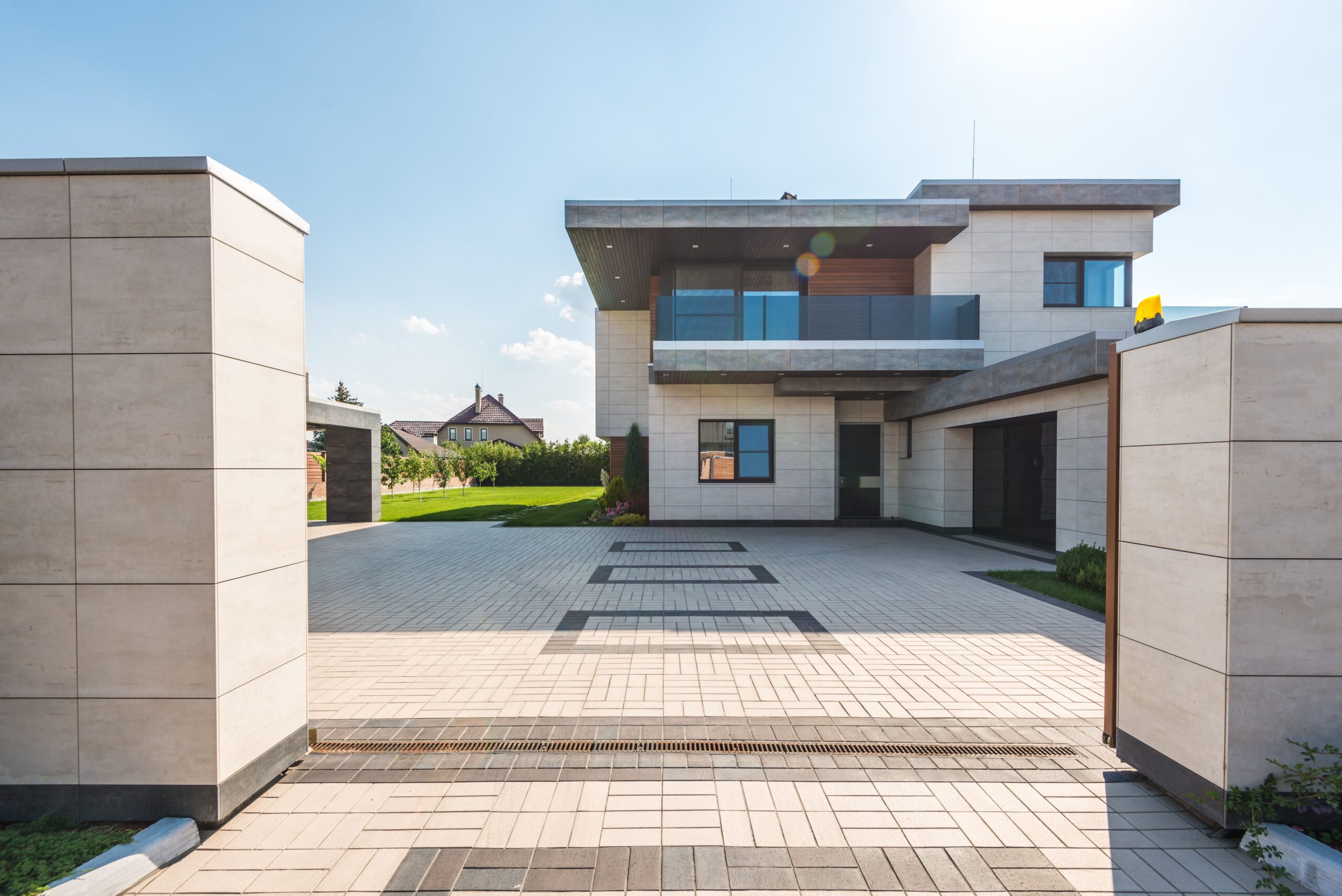
Even though this isn’t a guarded community, many homeowners add custom gated entries, long driveways, and landscaping that creates its own separation. You don’t need an HOA or a gatehouse to get that feeling of privacy out here. The land does the work.
Land type matters just as much as size
Some properties are entirely upland. Others include wetlands, or a mix of both. That doesn’t automatically make it a bad property, but it does change what it will cost you to fill the land and get it ready to build on, and that cost scales with how much land you’re working with. This is exactly the kind of detail I check before a buyer gets attached to a specific parcel.
Gopher Tortoises & Land Clearing Rules
In addition to soil moisture, Florida state law strictly protects Gopher Tortoises and their burrows. Under Florida Fish and Wildlife Conservation Commission (FWC) regulations, you cannot clear land or run heavy machinery within 25 feet of an active burrow without an FWC permit.
• Environmental Survey: Before clearing raw acreage, an authorized agent must survey the land for active burrows.
• Permitting & Relocation: If burrows fall within your construction footprint, tortoises must be safely relocated to a certified conservation site prior to site work.
• Why It Matters: Finding unpermitted burrows mid-clearing can halt construction for weeks and result in heavy state fines. Factoring tortoise surveys into your due-diligence period prevents unexpected building delays.
Understanding Uplands vs. Wetlands
One of the biggest factors determining land value, building cost, and buildability in Golden Gate Estates is whether a lot consists of uplands, wetlands, or a mixture of both:
• Uplands: Dry, elevated land that meets Florida Department of Environmental Protection (DEP) criteria. Uplands are buildable out of the box and generally require standard county building permits without extra environmental hurdles.
• Wetlands: Hydric soil areas regulated by the DEP that experience seasonal or permanent water presence. Wetland lots are still buildable, but developing on them requires an Environmental Resource Permit (ERP) and purchasing mitigation credits.
• Why It Matters: A parcel does not need to be 100% upland to build a home, but the exact location of the dry ground determines your home’s layout. If construction impacts wetland areas, mitigation credits can add $30,000 to $45,000+ to your total land-clearing and site-preparation costs.
Before placing an offer or clearing land, always request a DEP Wetland Determination report during your inspection period to verify the exact buildable footprint.
Flood zones have changed, and this trips people up
For a long time, people bought in Golden Gate Estates because it sat outside a flood zone. FEMA has since updated its maps, and you can no longer assume that. Being farther from a canal or any body of water doesn’t automatically mean lower flood risk on paper. Some parcels carry a FEMA designation that requires flood insurance regardless of how far they look from water.
Before you make a move on any property here, confirm its actual current FEMA flood zone. Don’t rely on how the area used to be classified, and don’t assume distance from water tells you the answer.
Getting in, and why the roads matter more than people think
There are two classic ways in: 951 to Golden Gate Boulevard, or 951 to Immokalee Road, depending on where you’re headed once you’re inside the Estates. Golden Gate Boulevard runs east to west through the middle and is still the road most residents rely on daily. Immokalee Road runs the north edge and has long been the other main artery.
That’s expanding. The Vanderbilt Beach Road Extension is bringing a new route into the interior of the Estates, with plans to eventually continue all the way to DeSoto Boulevard. Infrastructure like this doesn’t happen by accident. It’s the county responding to real growth and working to improve traffic flow, which tells you this area is going to keep growing, not slow down.
Behind that project, a new bridge on 16th Street Northeast connecting Golden Gate Boulevard to Randall Boulevard is under construction, and Randall Boulevard itself is being widened from two lanes to four to handle the traffic growth the county is projecting over the next couple of decades.
Where in the Estates you buy changes everything
Location matters more in Golden Gate Estates than people expect when they walk in. Areas around Weber Boulevard and 951 are more desirable because you can get to downtown Naples in about 15 minutes, close to restaurants and everything else that’s centrally located. Price points reflect that: this corridor commonly starts at $2 million and up.
Farther out, think the stretch from Everglades Boulevard to DeSoto Boulevard. You’re roughly 15 minutes further from downtown and amenities, and buyers out here are trading that extra drive time for affordability. Neither corridor is better or worse. It comes down to what matters most to you: being closer in, or paying less and driving a bit more.
Walkability and getting outside
There are no sidewalks on most streets in the Estates. If you want to walk, you pick a quiet side street, the way locals do every day. For a longer walk, especially with a dog, Big Corkscrew Island Regional Park is the spot, with an aquatic center, sports courts, a playground, and trails. Beyond the park, the Estates borders some of the best nature access in Southwest Florida: Picayune Strand State Forest, Corkscrew Swamp Sanctuary, the Belle Meade Horse Trail, and the CREW trail system.
Shopping, Dining & Commercial Growth
Living in Golden Gate Estates no longer means driving 30 minutes for everyday errands. The Immokalee Road corridor has expanded rapidly with modern commercial hubs:
• Founders Square (Immokalee Rd & Collier Blvd): The premier dining and social hub for the area, featuring restaurants like Oar & Iron, Outback Steakhouse, Tacos & Tequila, and local specialty shops.
• Winchester Center (Immokalee Rd & Orange Tree Blvd): Anchored by Sunshine Ace Hardware, offering everyday retail, dining, self-storage, and immediate medical care through NCH and Healthcare Network.
• Addison Place & Tree Farm Plaza: Quick access to ALDI, Chick-fil-A, and drive-thru dining right at the edge of the Estates.
• Neighborhood Shops at Orangetree: Local Publix grocery, pharmacies, and service centers catering to daily household needs.
Schools
Schools vary a lot depending on exactly where in the Estates you’re located. Homes here are zoned to Collier County Public Schools, and depending on your address, that typically means Estates Elementary, Corkscrew Middle School, and Palmetto Ridge High School, with Bear Creek Elementary in the mix as well. School zoning comes down to the exact address, so I always confirm the actual zoned schools for a property before anyone counts on it.
What it actually costs
Pricing here varies widely, and location within the Estates is the biggest driver. Right now, you’ll find homes from the low $500,000s up past $1 million depending on where you are. Along Weber Boulevard, you’re typically looking at $2 million and up. It’s not unusual today to work with buyers in the $3 to $4 million range for larger, more private parcels, it just depends on what they want. Based on 2025 closed sales countywide for the area, single-family homes averaged around $671,325, about $347 a square foot, with the top sale that year at $3,295,000.
You’ll also see a real mix of housing stock out here, from older homes to brand-new construction, in a range of styles. Treat all of this as the range to know going in, not a quote. I pull current, address-specific comps before we talk real numbers on any property you’re actually considering.
Is it the right move for you
Golden Gate Estates works best for buyers who value privacy and flexibility over amenities and being close to town. Some want the land itself: room for animals, a shop, extended family, or true distance from the next house. Others are business owners who need space for equipment, inventory, or a workshop that a standard Naples lot could never give them. Some just want quiet, and are glad to trade a longer drive for it. None of these reasons are better than another. It comes down to your budget, how far you’re willing to drive on a normal day, and whether well and septic, or land that needs fill work, is something you’re comfortable taking on.
If you want land without leaving Naples behind entirely, this is absolutely an area to consider. If you’re weighing it against North Naples, Old Naples, or somewhere closer to the coast, that’s a conversation I have with buyers all the time. Grab the Naples Relocation Guide for the fuller breakdown of how the Estates compares to the rest of the area, or reach out and we’ll walk through what fits you.
Are there HOA fees in Golden Gate Estates?
How do utilities work on Estates properties?
Can I build a guest house or workshop on my property?
How far is Golden Gate Estates from downtown Naples and beaches?
Can I keep farm animals, horses, or chickens?
What is the difference between uplands and wetlands here?